
The Farm

About The Farm & Estate
Ludlow Farm sits at the centre of Oakly Park Estate. Some details of the land-based activities that take place on the estate surrounding the Ludlow Farm site including arable cropping, livestock rearing and associated forestry and conservation efforts can be found below:
The arable operations involve growing the following plants (though the list is not exhaustive) – broad beans, winter wheat, feed wheat, winter and spring barley, oilseed rape, poppies, borage, buckwheat, wholecrop forage peas, oats and vetches.
90% of the feed we use for livestock is grown on our own farms, the remainder is made up of supplemental feed once the composition of our own feed is understood, usually to boost protein etc.
The beef cattle are Limousin cross. The farm shop only takes Limousin cross heifers. The farm shop butchers whole carcasses so we can offer a wide selection of unusual cuts as well as the more traditional ones.
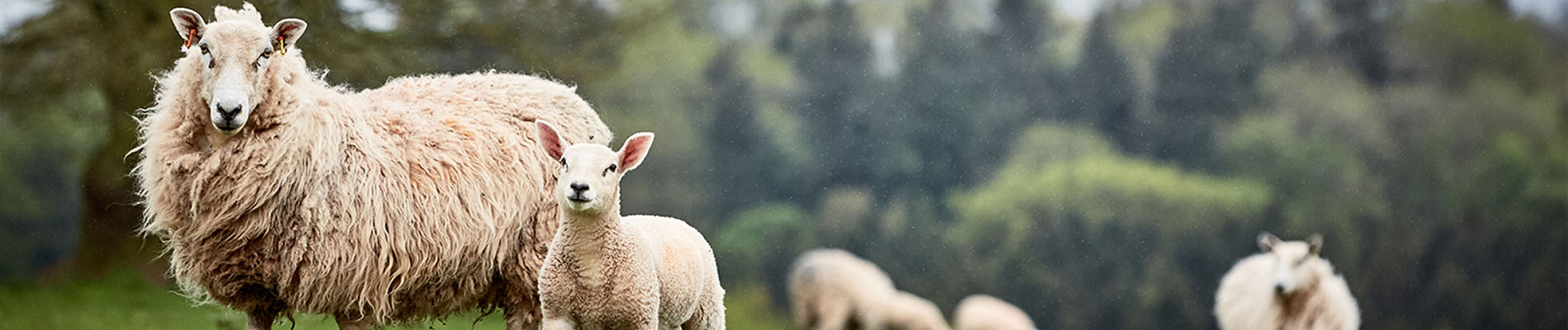
We have a large number of breeding ewes, composing of five main breeds chosen to contribute best confirmation, growth levels and birth weights for lambs along with good mothering attributes. We ideally hope to get an average two lambs per ewe each year with a significant number of these supplying the farm shop directly.
There is a significant herd of wild deer on the estate – mostly fallow but a small number of roe and muntjac are also present. Venison is sold at the shop and makes its way onto the menus at both The Clive Arms and Ludlow Kitchen.
Meat that we don’t produce ourselves is sourced carefully from local producers who share our high welfare ethos.
We have over 100 beehives and the only honey used and sold on site is from our bees. The bees help pollinate many of the flowers, fruit and vegetables across the farm.
We recently amalgamated two dairy herds into one and re-invested in a state-of-the-art robotic dairy unit which significantly improves our dairy cows’ welfare. The herd is a broad mix of Holstein, Fresian, Viking Red, Jersey, Montbeliard and Brown Swiss. The mix of breeds is chosen for the required milk composition and desired butterfat content for cheese making at the farm shop and the remainder sold to the milk cooperative Arla.
We are constantly reviewing and exploring options to improve biodiversity and habitat for wildlife across the estate, particularly along field margins and watercourses, woodland and hedgerows.


